

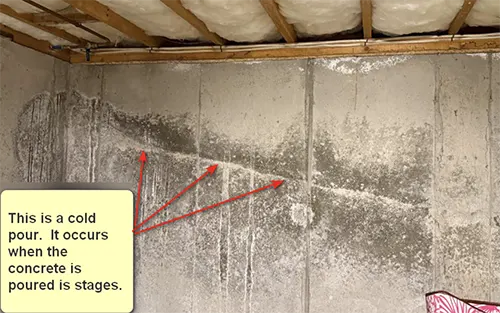
In this episode, Adam shares a very informative case study about a concrete cold pour and why it doesn’t always mean an expensive fix for the homeowner.
Narrator: It's time once again for the Crackman podcast, hosted by A1 Foundation crack repair. I'm Darren Kincaid and I'm here with the crack daddy himself, Adam Tracy. Adam has 20 years of experience in the construction industry, and as a civil engineer, is A1 Foundation's resident engineer on staff, solving a plethora of unique foundation problems every day. This podcast provides expert basement waterproofing, concrete repair, and preventative maintenance tips for homeowners and businesses. A1 Foundation's viable insight will help avert the disaster of a flooded basement, health problems that water infiltration, and protect your biggest investment, your home. The topic of today's podcast: Is that a crack in my foundation or a cold pour?
Narrator: So Adam, you sent a picture of a diagonal foundation wall crack that looks a bit worrisome. Was that an expensive fix for the homeowner?
Adam: Yeah, it's actually very common to see these. This one actually came up during a home inspection, where it was called out and the prospective homebuyers brought in another contractor. They said, “Hey, this is what was flagged—it was identified as a potential horizontal crack.”
And if you start researching horizontal cracks, it’s like WebMD-ing yourself when you have a headache. You get nervous really fast because it feels like the sky is falling—and your foundation might be going with it.
But in this particular case, it wasn’t a horizontal crack at all. It was just a cold pour.
Now, it’s probably important to understand what a cold pour is. A cold pour is essentially when two batches of concrete don’t fully mix or bond together during the pouring process.
As you can imagine, most concrete trucks can’t supply enough concrete to pour an entire foundation in one go. So typically, it takes multiple trucks to fill all the forms.
Sometimes, during that process, one batch might begin to set a bit faster than the next due to temperature differences or timing delays. In this case, the first truck poured and began to set slightly before the second truck arrived and poured on top of it.
That’s what creates a visible line where the second pour meets the first.
On its own, this isn’t dangerous. There’s usually still some bonding between the two pours, so it’s often just a cosmetic issue.
However, in this case, there was some dark staining present, which suggested that water may have seeped through at some point.
That said, there was no movement, no loss of footing, and no structural concern. It’s just something the homeowner would want to monitor and make sure it’s properly waterproofed to prevent future moisture intrusion.
So, while a horizontal crack can sometimes trigger big concerns—and big quotes from contractors—this situation turned out to be much simpler.
The repair cost ended up being less than $1,000, not the $10,000, $20,000, or even $50,000 that had been suggested.
Narrator: Well, thanks Adam for sharing this interesting case study about a concrete cold pour—and why it doesn’t always mean an expensive fix for the homeowner.
Narrator: If you have a basement water problem and think you need a professional, or if you like more information on foundation crack repair and basement waterproofing topics, please visit a1foundationcrackrepair.com or call Adam at (866) 929-3171. Or you can email Adam at info@a1foundationcrackrepair.com. Thanks for listening and keep that basement dry.